How to Grow Onions in Southern Gardens: A Complete Growing Guide
Onions are one of the most useful crops you can grow in a home garden. They are a kitchen staple, store well, and can be grown successfully in many Southern gardens when planted at the right time and given the right conditions.
In Southern climates, onions are usually grown during the cooler parts of the year. They benefit from fertile, well-drained soil, steady moisture, and proper spacing. Because onions take time to size up, they reward patient gardeners with a harvest that can be used fresh or stored for later use.
With good timing and basic care, onions can become a dependable crop in your Southern vegetable garden.
Why Onions Grow Well in Southern Gardens
Onions are well suited to Southern gardens because they can be grown during the cool season, when many summer crops are not producing.
Some of the reasons gardeners enjoy growing onions include:
- Reliable cool-season crop
- Useful in a wide range of recipes
- Good storage potential after harvest
- Suitable for garden beds, raised beds, and some containers
- Can be grown from seed, sets, or plants
Because onions take time to mature, they are a good crop for gardeners who want to make full use of fall, winter, and early spring growing windows.
If you’re deciding what else to grow in cooler seasons, explore our guide on the Best Vegetables for Southern Gardens.
When to Plant Onions in the South
Timing is especially important when growing onions.
In Southern gardens, onions are often planted during the cooler months so they can establish and grow before hot weather arrives.
Depending on the type of onion and the local climate, onions may be planted during:
- Fall, Oct-Nov for late spring harvest
- Late winter or early spring, Jan-Feb for early summer harvest
For the best planting times in your area, refer to our Southern Vegetable Planting Calendar.
Planting at the right time helps onions grow strong tops and develop properly sized bulbs.
For another useful cool-season crop, see our guide on How to Grow Cabbage in Southern Gardens.
Choosing the Right Onion Type
One of the most important factors in growing onions is choosing a type suited to your region.
Onions are often grouped by day length:
- Short-day onions
- Intermediate-day onions
- Long-day onions
Southern gardeners should grow short-day varieties or, in some areas, intermediate-day onions.
Choosing the right onion type for your location is important because bulb formation depends on day length and seasonal timing.
Growing Onions from Seed, Sets, or Direct seeding.
Onions can be grown in several ways.
Onion Seeds
Growing onions from seed gives gardeners the most variety, but it takes the longest and requires more planning. You get larger bulbs usually if grown from seed.
If starting from seed you should seeds about 6-8 weeks before planting.
Planting: Space onions 3-4″ apart. Rows 12″ apart.
Onion Sets
Sets are small onion bulbs grown the previous season and replanted for faster production.
Space bulbs 4″ apart, Rows 12″ apart
Onion sets usually produce smaller bulbs than if started from seed.
Direct Seed into Garden
Seeds can be put into the garden directly if the temperature is right. The soil needs to be 70-75° for germination and would need to be planted early February.
That is why starting seeds indoors is usually best to get the head start and better germination.
Choosing the Right Planting Location
Onions grow best in a location that provides:
- Full sun
- Fertile, well-drained soil
- Loose soil for easy bulb development
- Good airflow
Raised beds are often a good choice because they improve drainage and make soil preparation easier.
If you want to expand your cool-season garden, read How to Grow Broccoli in Southern Gardens.
Preparing Soil for Onions
Onions grow best in loose, fertile soil with good drainage.
Before planting, prepare the bed by:
- Removing weeds and debris
- Loosening compacted soil
- Mixing in compost or organic matter
- Raking the soil smooth
- Because onions grow partly underground, a loose soil structure helps bulbs size up more evenly.
If you are new to growing in warm climates, our Complete Guide to Southern Gardening is a helpful place to start.
Watering Onions
Onions need steady moisture during active growth.
Helpful watering practices include:
- Keep soil evenly moist
- Water deeply rather than lightly
- Avoid allowing the soil to become overly soggy
- Reduce watering as bulbs mature near harvest
Consistent moisture supports strong root growth and healthy bulb formation.
Mulch can help conserve soil moisture and suppress weeds.
If you are planting from seed, our guide on How to Read a Seed Packet for Better Garden Success can help you interpret spacing, depth, and maturity information.
Fertilizing Onions
Onions benefit from fertile soil and regular nutrition during active growth.
A good approach includes:
- Starting with compost-rich soil
- Using a balanced garden fertilizer if needed
- Feeding moderately while tops are actively growing
Because onions are grown for bulb development, steady nutrition is important, but overfeeding late in the season is usually not helpful.
Keeping Onion Beds Weed-Free
Onions do not compete well with weeds, especially early in the season.
Keeping the bed clean is important because weeds compete for:
- Water
- Nutrients
- Light
- Space
Gentle weeding and mulching help onions establish more successfully and size up better.
Common Problems When Growing Onions
Onions are generally straightforward to grow, but gardeners may still encounter a few common issues.
Small Bulbs
Possible causes include:
- Incorrect onion type for the region
- Crowding
- Poor soil fertility
- Inconsistent watering
- Rot or Poor Growth
Heavy, poorly drained soil can lead to problems with bulb development and overall plant health.
Weak Tops
Slow or weak top growth can reduce bulb size because the leaves help feed the developing onion.
Pest Pressure
Young onion plants can occasionally experience pest issues, though they are often less heavily affected than some leafy crops.
Harvesting Onions
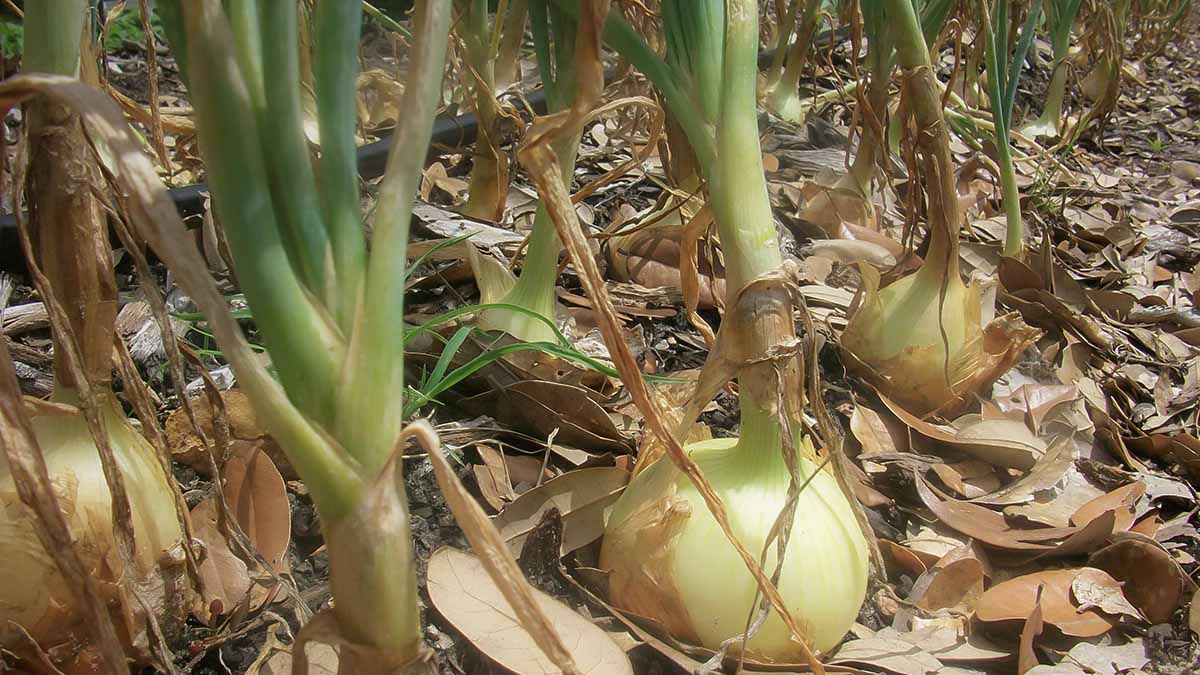
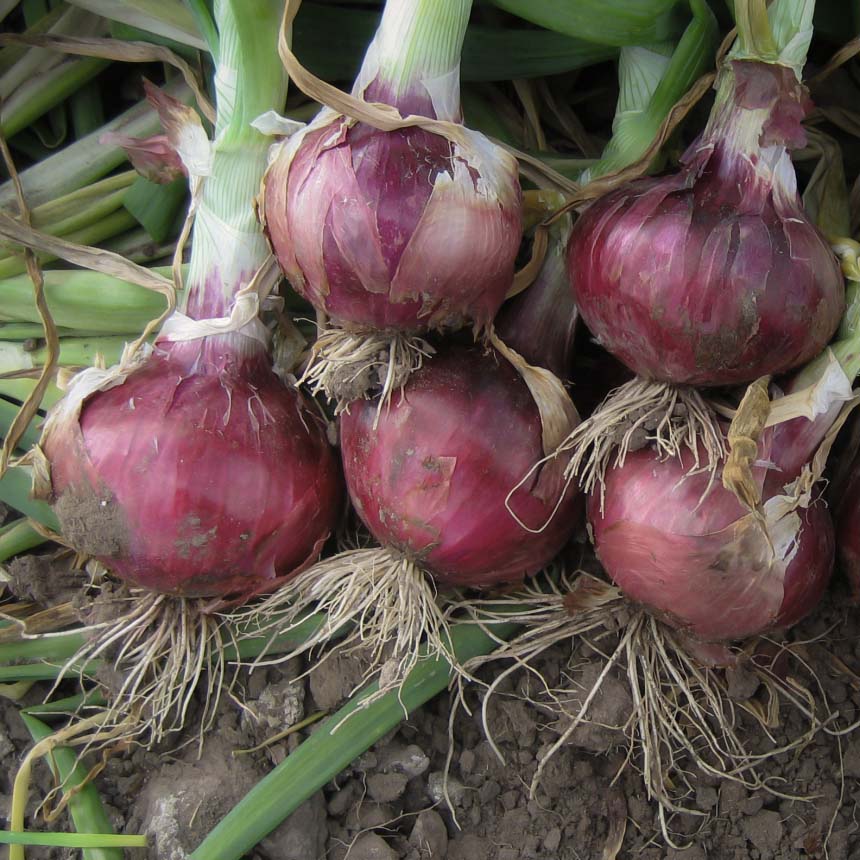
Onions are usually ready to harvest when their tops begin to yellow and fall over naturally.
Once this happens:
- Stop watering if appropriate
- Allow bulbs to mature in the soil briefly if conditions are dry
- Lift onions carefully from the ground
After harvest, onions are often cured in a dry, well-ventilated place before storage.
Curing helps the outer layers dry and improves storage life.
Why Onions Are a Valuable Garden Crop
Onions are especially useful because they are productive, practical, and store well.
They fit beautifully into Southern cool-season gardens and offer a harvest that continues to be useful long after many other crops are gone.
For gardeners who want a dependable, everyday crop with good storage potential, onions are an excellent choice.