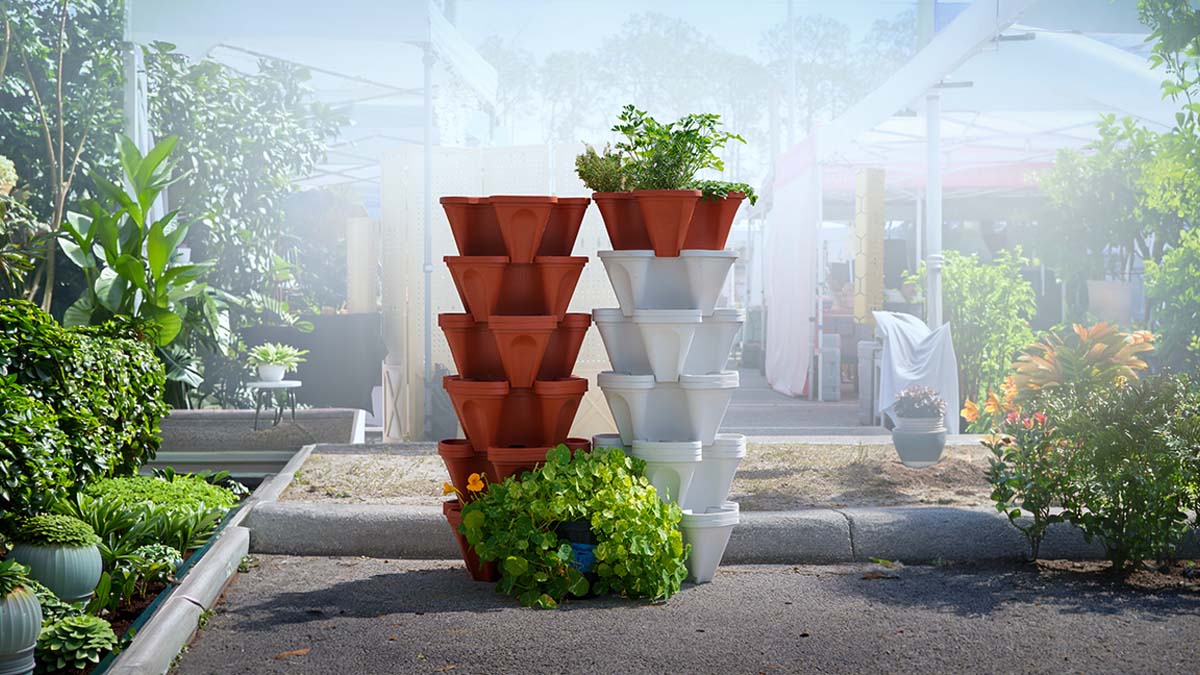
Don’t have the room for a traditional garden or raised bed? Grow in containers.
Container gardening is a great way to grow vegetables when space is limited. All you need is a good container, quality organic potting soil, and the right amount of light for the crop you want to grow.
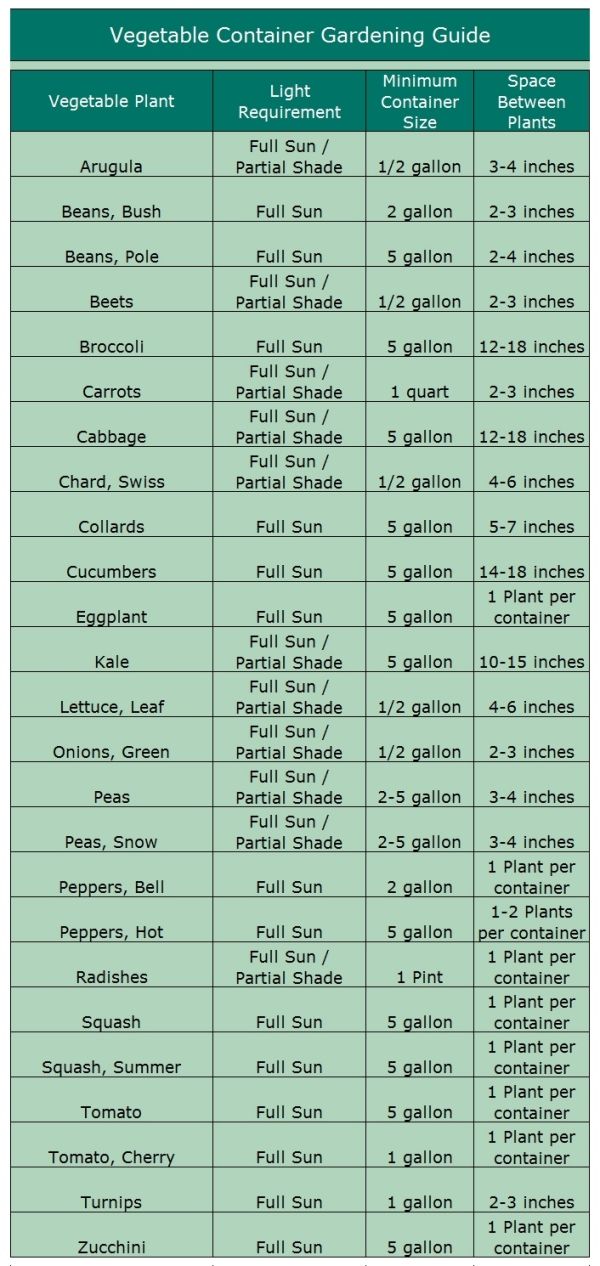
This guide will help you get started with container size, spacing, and light requirements for a variety of vegetables.
Getting Started with Container Gardening
When growing vegetables in containers, start with a good organic potting soil. Make sure your containers have drainage, and give each plant enough room based on its size and growing habit.
Some crops do well in smaller containers, while larger plants like tomatoes, squash, cucumbers, and broccoli need much more room.
Vegetable Container Gardening Guide
Use the chart below as a general guide for:
- light requirements
- minimum container size
- spacing between plants
A Few Things to Keep in Mind
Container gardens usually need watering more often than in-ground gardens, especially in warm weather.
Also remember:
- larger containers dry out slower than small ones
- full sun crops need plenty of direct light
- good potting soil makes a big difference
- crowded plants will not perform as well as properly spaced plants
Final Thoughts
If you do not have room for a traditional garden, containers are a great option.
Start with a few crops, use good soil, and let this guide help you choose the right container size and spacing. It is a simple way to grow a lot in a small space.