Tomato Hornworms: How to Identify and Control Them in Your Garden
Tomato hornworms are one of the most destructive pests that gardeners encounter when growing tomatoes and other plants in the nightshade family. These large green caterpillars can quickly defoliate plants, sometimes stripping entire stems of leaves almost overnight.
Because hornworms blend in so well with tomato foliage, many gardeners don’t notice them until serious damage has already occurred.
Learning how to identify tomato hornworms early and control them effectively can help protect your garden and preserve your harvest.
What Are Tomato Hornworms?
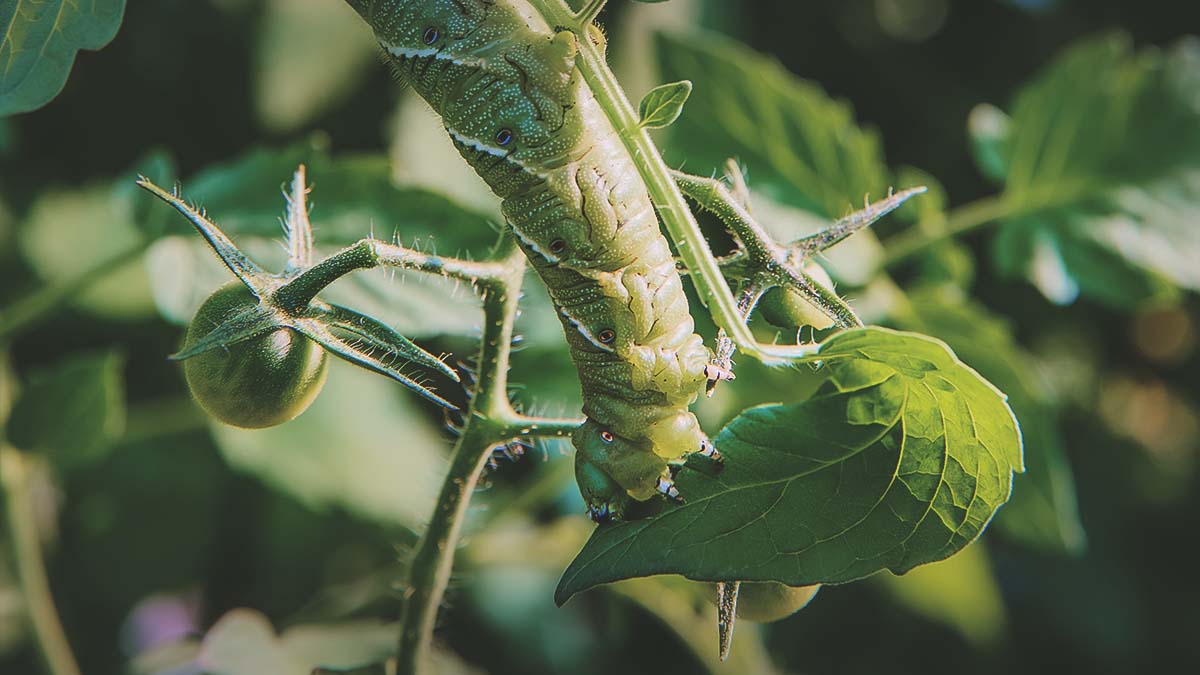
Tomato hornworms are the larval stage of a large moth known as the five-spotted hawk moth.
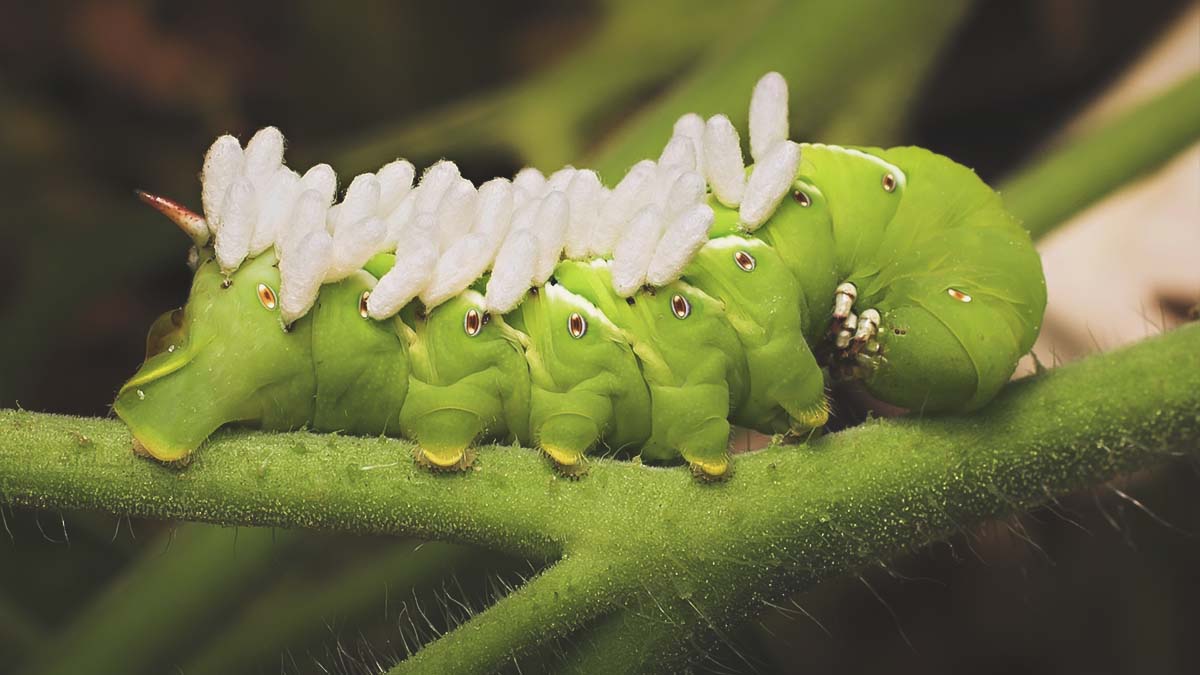
The caterpillars are bright green with white diagonal stripes along their sides and a distinctive horn-like projection on the back of their bodies.
Although they may look intimidating, the horn itself does not sting or harm humans.
Hornworms can grow up to four inches long, making them one of the largest caterpillars commonly found in vegetable gardens.
Plants Affected by Tomato Hornworms
Tomato hornworms feed primarily on plants in the nightshade family, including:
- Tomatoes
- Peppers
- Eggplants
- Potatoes
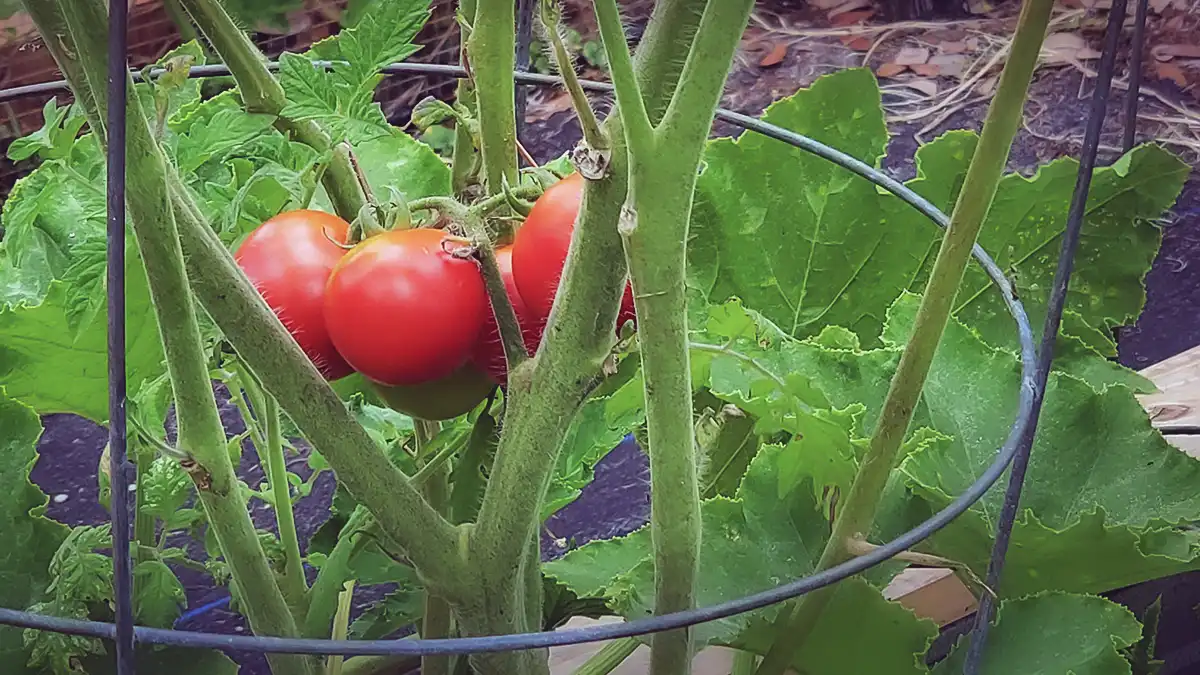
Tomato plants are the most common host and often suffer the greatest damage.
Signs of Tomato Hornworm Damage
Because hornworms are excellent at hiding among leaves and stems, gardeners often notice the damage before spotting the caterpillars themselves.
Common signs include:
- Large portions of leaves missing
- Stripped stems with little foliage remaining
- Chewed green tomatoes
- Dark droppings (called frass) on leaves or soil below the plant
If you see small piles of dark droppings beneath your tomato plants, look closely at the surrounding foliage. A hornworm is often hiding nearby.
How Tomato Hornworms Harm Plants
Tomato hornworms are extremely hungry caterpillars that consume large amounts of plant material.
Even a single hornworm can strip multiple leaves from a plant in a short period of time. When several hornworms are present, the damage can be severe.
Heavy feeding weakens plants and can reduce fruit production.
How to Find Tomato Hornworms
Hornworms can be difficult to spot because their green color blends perfectly with tomato leaves.
Here are several helpful ways to find them.
Inspect Plants Carefully
Look closely along stems and the underside of leaves. Hornworms often remain still during the day, making them difficult to notice.
Look for Droppings
Dark green or black droppings on leaves or soil are often the first sign of a hornworm nearby.
Follow the droppings upward to locate the caterpillar.
Check Plants in Early Morning or Evening
Hornworms may be easier to spot when they are actively feeding during cooler parts of the day.
Natural Ways to Control Tomato Hornworms
Fortunately, several effective methods can help control tomato hornworms without harsh chemicals.
Hand Removal
The simplest method is to remove hornworms by hand.
Although they look intimidating, they are harmless to people. Simply pick them off the plant and dispose of them.
Many gardeners drop them into a bucket of soapy water.
Encourage Beneficial Insects
One of the most fascinating natural predators of hornworms is the parasitic wasp.
If you see hornworms covered with small white cocoons, do not remove them. These cocoons contain beneficial wasp larvae that will help control future hornworm populations.
Use Organic Pest Controls
Products containing Bacillus thuringiensis (Bt) can help control hornworm caterpillars.
Bt is a naturally occurring soil bacteria that targets caterpillars while remaining safe for beneficial insects, pets, and people.
Apply according to product instructions for best results.
Spinosad
Products with Spinosad are also good for hornworms and also kill other leaf eating pests so it is multi useful.
Preventing Future Hornworm Problems
Preventing hornworms is often easier than dealing with a large infestation.
Helpful prevention strategies include:
- Regularly inspect tomato plants for pests
- Remove caterpillars early before populations grow
- Encourage beneficial insects in your garden
- Rotate crops each season
Healthy plants are also better able to withstand minor pest damage.
Should You Always Kill Tomato Hornworms?
While hornworms can cause significant damage, they also play a role in the garden ecosystem.
Many gardeners allow parasitic wasps to control hornworms naturally when possible.
If hornworms are present in small numbers, simple hand removal may be enough to protect your plants.
Protecting Your Tomato Plants
Tomato hornworms are a common challenge for gardeners, especially in warm climates where multiple generations can appear during the growing season.
Fortunately, with regular monitoring and early action, hornworms can usually be controlled before they cause serious damage.
By learning how to recognize the signs of hornworm activity and using natural control methods, you can keep your tomato plants healthy and productive throughout the growing season.